
Green Technologies: What Works in NZ
Green technologies can cut emissions, waste and pollution, but the label alone says little. In New Zealand, a useful test is whether a product or process improves on what it replaces under local operating conditions.
New Zealand’s electricity is already largely renewable. The rest of its energy system is a different story. In 2025, renewables supplied 88.5% of New Zealand's electricity generation , according to the Ministry of Business, Innovation and Employment (MBIE). Yet renewables accounted for 47.7% of total primary energy supply . That gap makes transport and industrial heat important targets for electrification. The equipment being replaced, its use and the new system’s lifecycle still need scrutiny.
What is green technology?
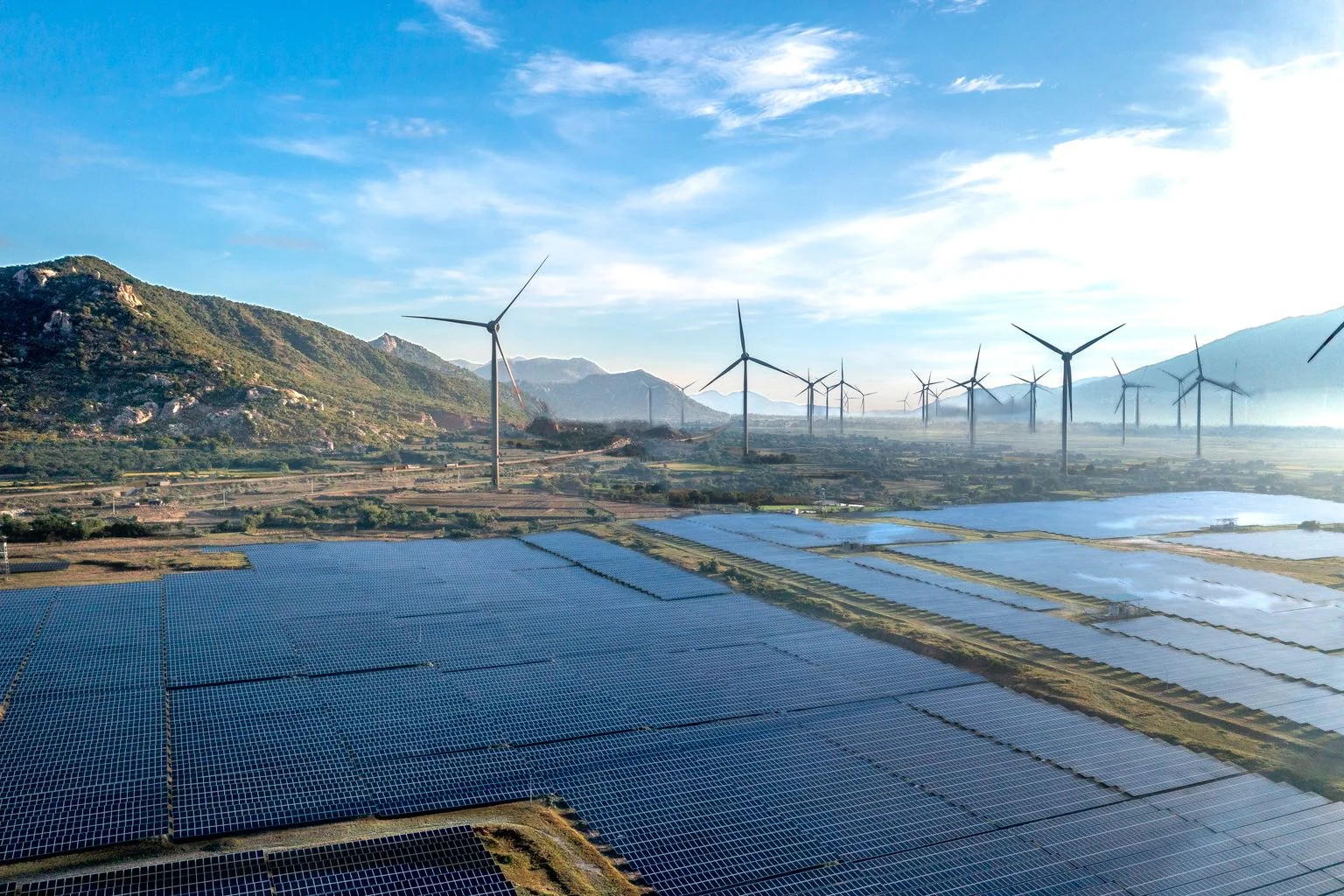
Wind power needs ongoing performance monitoring at operating sites.
Green technology covers products and methods that reduce environmental harm compared with a realistic alternative. Also called green tech , environmental technology or cleantech , it includes renewable energy, energy efficiency, cleaner transport, water treatment, resource recovery and digital systems that help avoid waste.
The labels are not exact synonyms. Climate technology focuses on greenhouse gas emissions or climate adaptation. Clean technology often describes commercially deployable solutions for energy, materials or pollution. Sustainable technology can also account for long-term social, economic and ecological effects. None of those labels guarantees a lower impact in a particular setting.
Ask what impact changes, compared with which alternative, and how the result will be measured. An unused efficient device or a battery with no practical role may achieve little.
The main types of green technologies
The main categories differ in the problem they address:
| Technology | How it helps | What to check |
|---|---|---|
| Renewable electricity | Solar photovoltaic (PV) panels, wind turbines, hydropower and geothermal generation can displace fossil-fuel generation. | Local resource, generation profile, grid connection and ecological impacts. |
| Energy efficiency and electrification | Heat pumps, LED lighting, efficient motors and electric industrial heat reduce energy demand or replace combustion. | Actual energy use, operating conditions and whole-of-life cost. |
| Storage and smart grids | Rechargeable batteries, battery energy storage systems (BESS), demand response and digital grid controls shift energy between periods. | Power (MW), energy capacity (MWh), cycle life and required backup duration. |
| Low-emission transport | Electric vehicles (EVs), charging infrastructure and selected biofuels reduce reliance on petrol or diesel. | Vehicle duty cycle, charging access, electricity demand and lifecycle emissions. |
| Sustainable agriculture | Precision agriculture, Internet of Things (IoT) sensors, drones and remote sensing help target water and nutrient use. | Measured input savings, farm conditions, data quality and maintenance. |
| Water and waste systems | Wastewater treatment, stormwater controls, reuse, repair, recycling and product stewardship reduce contamination and discarded materials. | Water quality, recovery rate, contamination and end markets. |
| Green buildings and computing | Insulation, efficient ventilation, better building design and energy-efficient data centres reduce operational demand. | Metered performance, embodied carbon, equipment life and workload efficiency. |
Some emerging solutions, including carbon capture and storage (CCS), direct air capture (DAC), bioenergy with carbon capture and storage (BECCS), environmental biotechnology and precision fermentation, may address emissions that are harder to eliminate. These approaches depend heavily on local process conditions and energy inputs. They should not be treated as substitutes for proven efficiency measures.
Why New Zealand's energy mix changes the calculation
Coastal wind generation is one part of New Zealand’s renewable electricity mix.
Aotearoa New Zealand has a distinctive combination of hydroelectricity, geothermal resources, wind generation and expanding solar power. MBIE reports that geothermal and solar generation reached record highs in 2025. Hydropower remains vital, but rainfall and lake storage affect output; thermal generation using natural gas or coal can still be needed when supply is tight.
Hydro, geothermal, wind and solar solve different problems
Hydropower can provide considerable flexibility where stored water is available, although dry years create exposure to hydrological risk and generation must account for river ecosystems. Geothermal stations, particularly in the Taupō Volcanic Zone, provide steady output that is valuable for the grid, but have site-specific resource and environmental constraints. Wind power offers electricity without fuel combustion, while output changes with weather. Rooftop solar and utility-scale solar farms produce electricity mainly during daylight and cannot independently meet evening demand.
More renewable generation does not, by itself, guarantee supply at every hour. An electricity project needs a credible plan for variable generation, transmission capacity, local network constraints and system flexibility. Land use, biodiversity, water impacts, consent requirements and engagement with affected communities, iwi and hapū also matter.
Why batteries matter - and what they cannot do
Grid-scale batteries charge when electricity is available and discharge when it is more valuable or urgently needed. The Electricity Authority has described installations including Rotohiko, Ruakākā and Glenbrook-Ohurua, alongside services such as frequency reserves and grid resilience. For example, a 100 MW/200 MWh BESS could supply 100 MW for roughly two hours, before operating limits and losses. Its power rating alone says little about how long it can support demand.
Batteries can respond quickly to short-term imbalances, but they do not generate new energy or automatically solve extended low-wind or dry-year shortages. Long-duration storage, demand response, transmission upgrades and dispatchable generation address different parts of the reliability problem.
Where green technology has the most impact

Homes and buildings: start with demand
For many households, insulation, draught sealing and efficient heating are sensible starting points before rooftop generation. An appropriately sized heat pump moves heat rather than creating it through direct resistance, although real savings depend on climate, installation, insulation and usage habits. Solar PV makes most sense when roof orientation, shading, daytime consumption, export arrangements and electricity tariffs support the economics.
Home battery storage may provide backup capability or shift solar generation into the evening. But the financial result depends on installed cost, usable capacity, efficiency and the difference between import and export prices. A household with low daytime demand and poor export terms faces a different decision from one with a high daytime load or an EV that can charge while solar output is strong. Use electricity bills and interval-meter data rather than panel nameplate output alone.
Transport: match the technology to the route
Electric vehicles can lower operational emissions and reduce exposure to petrol and diesel consumption, especially when charged from a predominantly renewable electricity system. Their suitability still depends on daily distance, overnight charging, public charging access, carrying load, battery health and the total cost of ownership. A fleet operator should start with routes and how long each vehicle stays at the depot, not a brochure range figure.
Electric buses, delivery vehicles and other forms of e-mobility can be attractive where predictable routes make charging practical. Heavy transport, long-distance operations and some industrial uses may require different approaches. Green hydrogen made by electrolysis using low-emission electricity is being explored for hard-to-electrify applications, including hydrogen fuel cells and potentially green ammonia or other e-fuels. However, hydrogen conversion, storage and transport introduce energy losses and additional infrastructure costs. It should be assessed against direct electrification rather than assumed to be the cleaner option in every setting. Grey hydrogen made from fossil fuels and blue hydrogen paired with carbon capture have different emissions profiles from renewable hydrogen.
Agriculture: measure inputs and outcomes
New Zealand's agriculture creates opportunities for practical environmental monitoring as well as emissions reduction. Precision agriculture can combine soil-moisture probes, nutrient-level sensors, weather data, satellite imagery, drones and machine learning to improve irrigation and fertiliser decisions. IoT systems can send alerts when conditions change, while data analytics can help farmers compare inputs with yields and environmental outcomes.
Sensor counts are a poor measure of success. Compare water use, nutrient losses and crop or pasture performance before and after deployment. Monitoring alone cannot solve agricultural methane emissions, nor does a digital dashboard prove that a farm has become sustainable. A probe placed in unrepresentative soil, or one that has drifted out of calibration, can send irrigation decisions in the wrong direction.
Industry: focus on heat, materials and process design
Food processing, manufacturing and other industrial operations often use energy for heat rather than just electricity. Electrified process heat, heat recovery, improved controls and efficient motors can reduce fossil-fuel dependence when designed around the required temperature, operating hours and site capacity. A feasibility study should examine equipment lifetime, electricity connection costs, downtime, peak demand and the emissions intensity of the alternative fuel.
Redesigned packaging, recovered process water and repaired machinery can avoid waste without requiring a new generation plant.
Circular economy, water protection and biodiversity
Green technology is not limited to carbon dioxide. The circular economy replaces a linear take-make-dispose model with longer product life, reuse, repair, refurbishment, remanufacture and recycling. New Zealand's Ministry for the Environment describes product stewardship as shared responsibility for limiting environmental impacts across the product lifecycle. Collection is not the same as successful recovery: the material needs a viable next use.
Designing out waste matters for consumer goods, construction materials, electronics and batteries. E-waste contains recoverable materials but also creates handling and contamination risks. Critical minerals used in batteries and other clean-energy equipment add supply-chain, mining and end-of-life considerations. A durable, repairable product may outperform a newer “green” replacement if the replacement's manufacturing impact is large and its operational savings are small.
Water technology addresses another set of priorities: safe drinking water, wastewater treatment, stormwater runoff and freshwater ecosystem protection. Sensors can detect changes in water quality; treatment systems can reduce pollutants; and resource recovery can extract useful outputs from waste streams. Whether a system is suitable depends on the actual contaminants, energy requirements, maintenance burden and discharge standards. Some approaches, such as advanced desalination, are useful in particular water-stressed settings but are not automatically the best answer for New Zealand catchments.
Environmental monitoring also supports biodiversity protection. Remote sensing, satellite-based Earth observation, automated acoustic monitoring, underwater robots and carefully applied artificial intelligence can help track habitats and changes affecting endemic species. Such tools supplement, rather than replace, ecological fieldwork and decisions about land and water management. A larger dataset matters only if it changes conservation decisions or helps track restoration.
Green computing: benefits and environmental costs
Digital tools can make energy and resource systems more responsive. Smart grids use forecasting and controls to match supply with demand; carbon accounting platforms organise emissions data; and software can identify process inefficiencies. Yet artificial intelligence, blockchain infrastructure, data centres, networks and connected devices all consume electricity and require hardware.
Green IT therefore looks at efficient computing, green software, responsible procurement, hardware lifespan, cooling demand and electronic waste. A useful comparison measures the environmental savings created by an application against the computing, storage and equipment required to run it. Buying new devices to display information that does not influence decisions is not an environmental improvement.
For digital projects, track what the software actually changes: power consumption, vehicle kilometres, water use or discarded materials. A dashboard without a decision attached adds its own footprint.
Are green technologies always environmentally friendly?
No. Many deliver substantial benefits, but the scale of improvement depends on their lifecycle and use. A lifecycle assessment (LCA) examines impacts across raw material extraction, manufacturing, transport, operation, maintenance and end-of-life treatment. Carbon footprint is one part of that picture; water use, pollution, habitat disturbance and material depletion may also affect the decision.
Common trade-offs include land and ecological pressure from energy projects, embodied emissions in construction, mineral extraction for batteries, grid upgrades for electrification and the energy requirements of carbon capture technologies. Bioenergy and biofuels can be useful when sourced sustainably, but land-use change and supply-chain emissions can undermine their advantages. Greenhouse gas removal technologies such as DAC and BECCS need credible accounting for energy use, carbon storage and permanence.
Corporate climate targets and net zero commitments should not be treated as evidence that a particular product works. Credible carbon accounting distinguishes direct emissions, purchased-energy emissions and value-chain emissions, with a clear boundary and method. Avoided emissions estimates should not be quietly presented as reductions in a company's own inventory.
How to choose the right green technology
Electric transport works best when charging patterns and total running costs fit the user.
Start with the problem and its measured scale, not with a technology catalogue.
- Set the baseline. Record the existing electricity or fuel use, water consumption, waste volume, emissions or maintenance cost over a representative period.
- Define the outcome. Specify the desired improvement, such as lower annual energy demand, reduced nutrient loss or fewer diesel kilometres.
- Check local fit. Consider weather, geography, land use, grid or network connection, available skills, permits and infrastructure.
- Compare realistic alternatives. Include reducing demand, repairing existing equipment and changing operating practices before assuming new hardware is essential.
- Model total cost of ownership. Include capital expenditure, installation, servicing, consumables, electricity or fuel costs, financing, equipment lifespan and disposal.
- Examine unintended impacts. Consider embodied carbon, critical minerals, water use, biodiversity, e-waste and potential rebound effects.
- Verify results. Measure performance after implementation against the baseline, adjusting for weather, production volume or other material differences.
For instance, a business considering rooftop solar should establish its half-hourly electricity demand before requesting a system size. A farm evaluating smart irrigation needs evidence that sensor-guided decisions reduce water use or nutrient losses under its own soil and weather conditions. A fleet replacing diesel vehicles should examine actual daily routes and charger availability before deciding how many EVs to buy.
New Zealand organisations can look to EECA for energy-efficiency and electrification information, MBIE for energy statistics, the Electricity Authority for grid and market information, and the New Zealand Green Building Council (NZGBC) for relevant building practices. Local councils and affected iwi or hapū may need to be involved where water, land, ecosystems or infrastructure are concerned. Businesses can also explore knowledge-sharing through the Sustainable Business Council and the broader cleantech innovation ecosystem, including work documented by Callaghan Innovation. Supplier case studies are a starting point; local measurements and independent evidence are stronger.
What is next for green technology in Aotearoa?
New Zealand's energy transition is increasingly about linking systems rather than promoting one breakthrough. Expanded solar and wind generation need suitable network capacity and flexible demand. Grid-scale batteries can help with short-term balancing, while efficiency, electrified industrial heat and cleaner transport can reduce reliance on fossil fuels outside electricity generation. Better water and waste management can produce environmental value even when carbon savings are modest.
Innovation matters, including deep tech, environmental biotechnology and new materials, but maturity matters just as much. Pilot projects should not be confused with commercially proven systems. Funding, procurement requirements, permitting, supply-chain resilience and the ability to maintain equipment determine whether promising ideas become dependable infrastructure. Collaboration among researchers, utilities, policymakers, businesses and Māori communities can improve decisions when local knowledge and environmental responsibilities are taken seriously.
For a New Zealand project, the crucial evidence comes after installation: bills, meter readings, water tests, maintenance records or measured emissions compared with the original baseline.
Frequently asked questions
What are five examples of green technology?
Solar PV, geothermal electricity generation, heat pumps, electric vehicles and precision-irrigation systems are five examples. Each addresses a different source of energy use or environmental impact, so their benefits should be measured differently.
Is renewable energy the same as green technology?
No. Renewable energy is one major category of green technology. The wider field also includes pollution prevention, water treatment, circular product design, building efficiency, sustainable transport and environmental monitoring.
Why NZ needs green technology on a renewable grid
Electricity is only part of total energy supply. Transport fuels, industrial heat, agriculture, materials and waste still have significant environmental impacts. The high renewable share of electricity also does not eliminate the need for grid resilience during dry or low-generation periods.
Are solar panels or EVs the best first step?
Not always. Insulation, efficient appliances, route changes, maintenance or demand reduction may deliver a better result for a particular household or business. Decisions should follow an assessment of actual consumption, infrastructure and whole-of-life costs.
How can greenwashing be identified?
Look for a stated baseline, a defined environmental metric, evidence covering relevant lifecycle stages and independently checkable results. Claims such as “eco-friendly” or “carbon neutral” without a clear scope, method or supporting data deserve scrutiny.